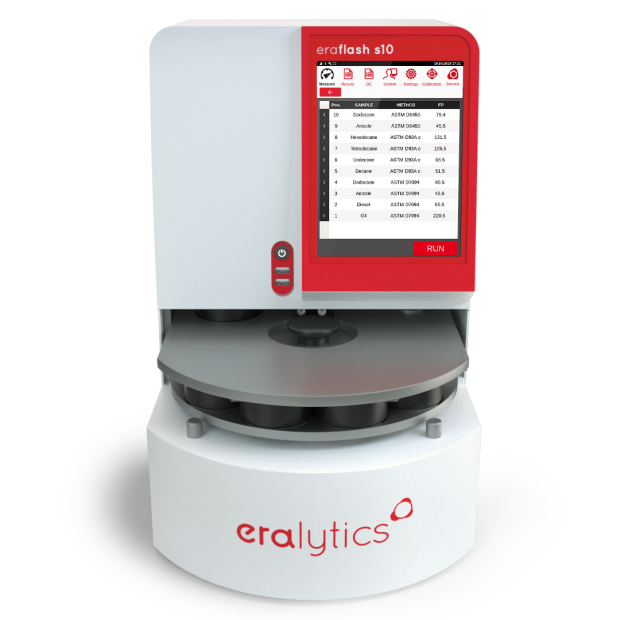
eralytics’ flash point tester eraflash s10 combines the safest measurement with a 10-position autosampler. The inherently safe CCCFP methods ASTM D6450, ASTM D7094, ISO 24966 and IP 620 are ideal for unattended measurements. eraflash s10 ignites the vapors of 1-2 ml of the sample inside a closed chamber and measures according to the pressure increase.
eraflash s10 at a glance
360° View
Autosampler for flash point testing
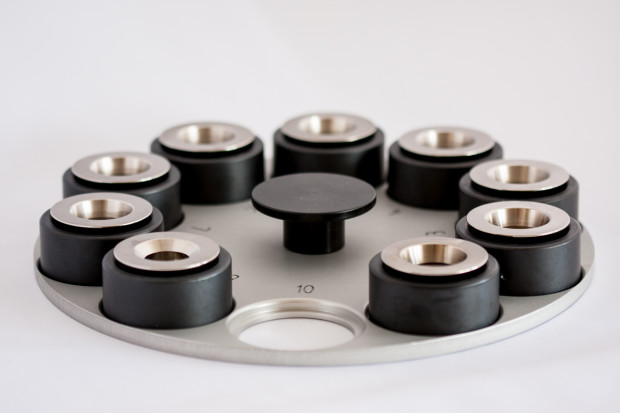
eraflash s10 is the first 10-position autosampler for flash point testing. It uses the inherently safe methods ASTM D6450, ASTM D7094, ISO 24966 and IP 620. With a low sample volume of only 1-2 mL and the continuously closed sample cups, these methods are ideally suited for building a completely safe autosampler for flash point testing. eraflash s10 is the perfect solution for high-throughput laboratories and takes up minimal bench space.
This makes eraflash s10 the ideal analyzer for unattended flash point testing.
Cost-efficient and fast flash point testing
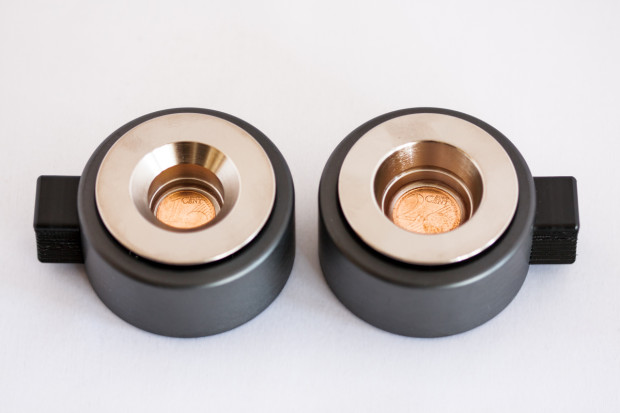
When testing valuable products, especially in small batch sizes, flash point testing using the traditional Pensky-Martens principle can consume a significant amount of sample, leading to high analytical costs. In contrast, performing flash point testing according to ASTM D7094, ISO 24966, and IP 620 requires just 2 mL of sample. ASTM D6450 reduces this volume even further to 1 mL.
eraflash s10 is therefore a welcome addition to testing labs handling large amounts of costly samples every day, including producers of fragrances, paints, and varnishes.
Peltier Boost Technology®
Similar to eralytics’ single-position flash point tester, the patented PBT – Peltier Boost Technology® allows flash point testing below 0 °C (32 °F) and above 200 °C (392 °F) with a single instrument. PBT separates the Peltier elements during heat-up at 100 °C, shielding them from higher temperatures that would normally harm them. During cool-down, however, they can be used for active cooling starting at 200 °C, thus significantly reducing turnaround time. PBT also provides the same temperature range of -25 °C (-13 °F) to 420 °C (788 °F) as our single-position flash point tester in an autosampler format.
scroll to see more images
gallery controls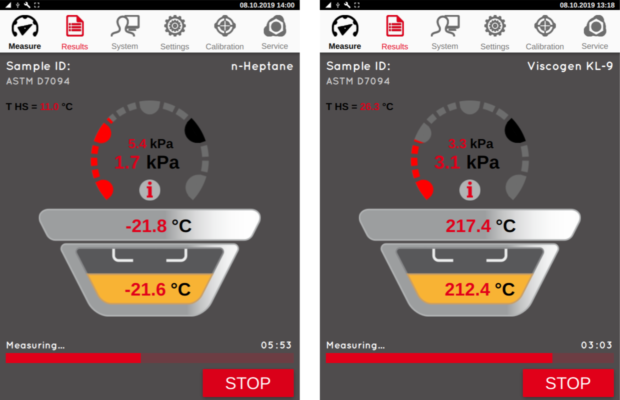
A cooling lid for shorter turnaround times
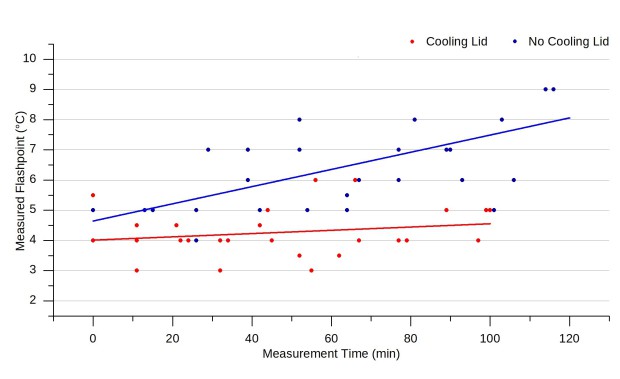
eraflash s10’s optional cooling lid is an unsurpassed value, especially in applications that involve highly volatile samples. The lid keeps pending samples at a stable, low temperature, minimizing the evaporation of volatile sample components before measurement starts. Therefore, results are more precise and more reliable. With pre-cooled sample cups cooling during the measurement can be less intense, which results in shorter turnaround times.
Measurement procedure
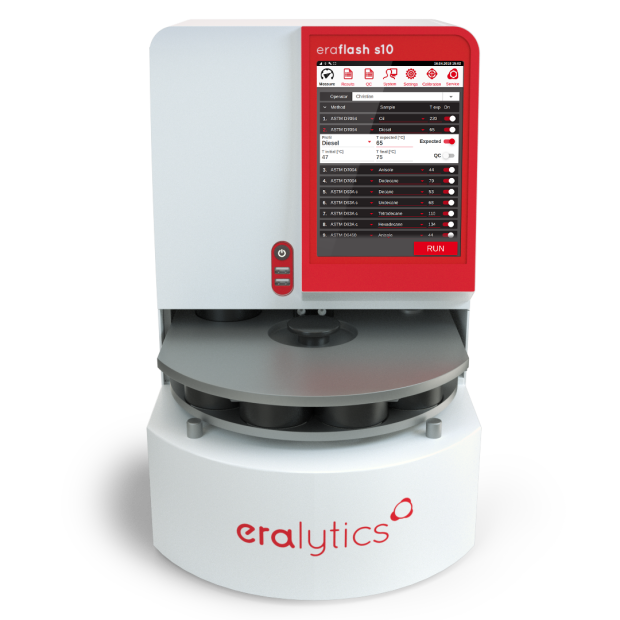
Just four easy steps are required for unattended, safe, and fast flash point testing at maximum precision:
- Enter sample IDs and operator name
- Select the measurement standards and add additional parameters (e.g., expected flash point)
- Fill up to 10 sample cups with sample, place the sample cups on the carousel, and close the cover plate
- Press the RUN button
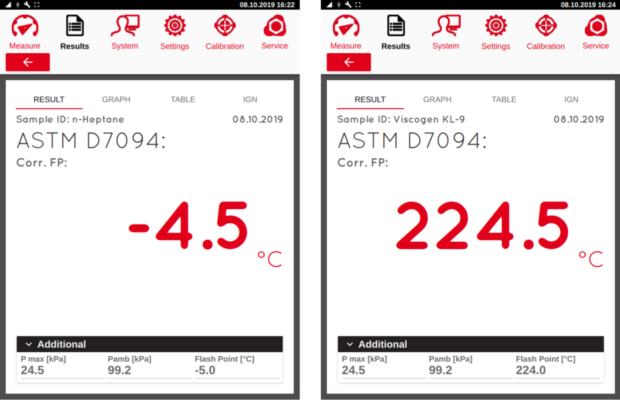
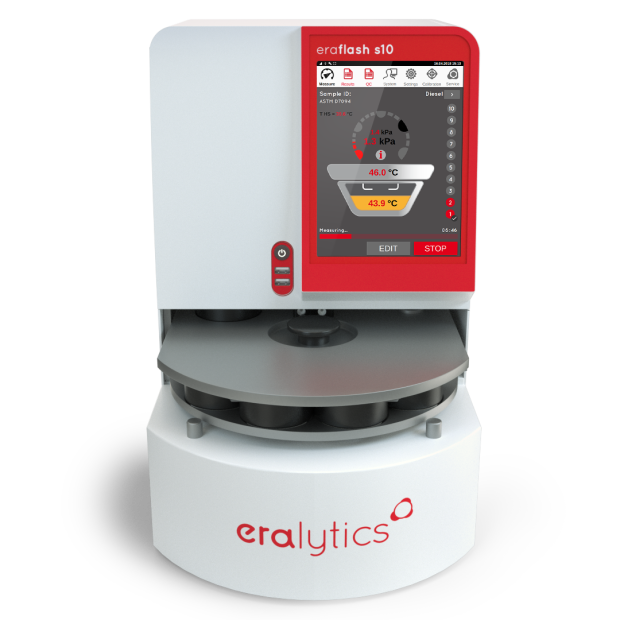
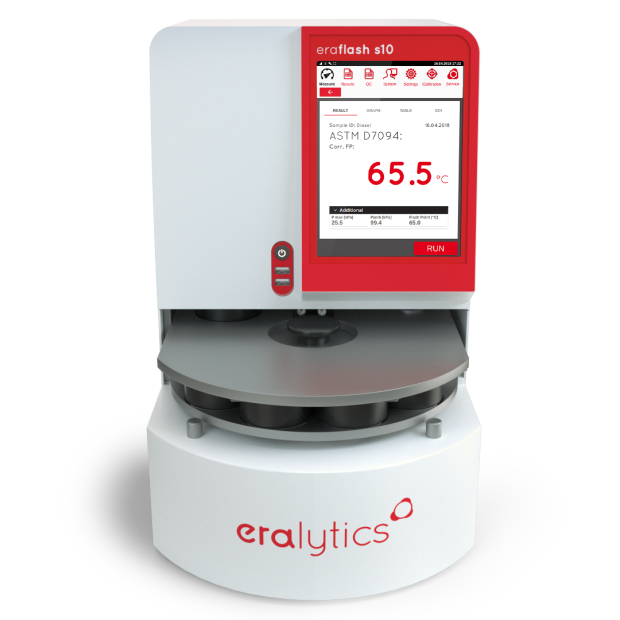
During flash point testing, the instrument visualizes the measurement procedure on the screen, showing the sample and oven temperatures as well as a pressure gauge displaying the pressure increase after ignition. After the measurement, the flash point temperature is automatically corrected for atmospheric pressure and rounded to the nearest 0.5 °C. The result is saved in the corresponding result file.
scroll to see more images
gallery controls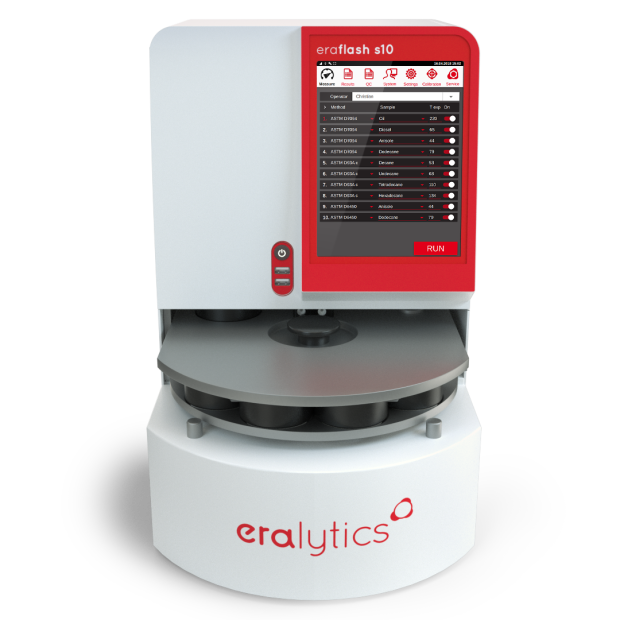
eraflash s10 feature video
- High sample throughput: 10-position autosampler for unattended testing
- Inherently safe: No open flame used during measurement
- Minimal sample volume: Only 1–2 mL of sample needed
- Compact footprint: Takes up minimal laboratory bench space
- Fully compliant: ASTM D6450, ASTM D7094, ISO 24966, and IP 620
- Versatile applications: Measurement of fuels, lubricants, fragrances, flavors, paints, and hazardous waste
eraflash s10 operation video
Watch this video to get an overview on the standard operation of eraflash s10: From installation to measurement and some extended measuring options.
eraflash s10 in detail
Technical Specifications for eraflash s10
- Standard Test Methods
- ASTM D6450, D7094, D8606, ISO 24966, IP 620, SH/T 0768
- Fuel Specifications (ASTM D7094)
- ASTM D396, D975, D1655, D2880, D3699, D7467, D7566
- Approved by
- NATO, RCRA, US DOT, US NAVY
- Special Test Methods
- Fast screening test method SCAN for unknown samples, Flash / No Flash tests, freely programmable test methods
- Correlation Test Methods
- Pensky-Martens Closed Cup: ASTM D93; EN ISO 2719; DIN 51758; IP34; JIS K2265
TAG Closed Cup: ASTM D56
Abel-Pensky Closed Cup: ISO 13736; IP170
Small Scale Closed Cup: ASTM D3828; EN ISO 3679, EN ISO 3680 - Sample Handling & Operation
- Stand-alone 10-position autosampler, no PC required
- PBT – Peltier Boost Technology®
- High-speed heating & cooling
-25 °C to 420 °C (-13 °F to 788 °F) with a single analyzer - CPT – Contamination Prevention Technology™
- Advanced electrode protection and self-cleaning ignition system to minimize cleaning and maintenance
- Combustion Graphics™
- Display of combustion characteristics for contamination analysis
- QC Mode
- Built-in quality control mode including on-screen QC charts
- Cooling Lid Temperature
- 5 °C to 30 °C (optional)
- QuickCal™
- In-situ calibration with eralytics unique calibration cups without the need to dismantle the instrument
- Fuel Dilution Program
- Automatic fuel dilution measurement for the analysis of used engine oils
- Temperature Range
- 0 °C to 200 °C (32 °F to 390 °F) stand alone
down to -25 °C (-13 °F) with external cooling
up to 420 °C (788 °F) with optional High Temperature Module - Temperature Stability
- 0.1 °C (0.2 °F)
- Unattended Sample Throughput
- 10 loaded samples within approximately 45 minutes (depending on temperature range)
- Sample Volume
- 1 mL (ASTM D6450), 2 mL (ASTM D7094, ISO 24966)
- Sample Cups
- Nickel-plated aluminum, stainless steel cups available upon request
- Result Database
- Over 100 000 detailed test reports stored in internal memory
- Alarm Tracking
- All alarm messages are stored in the database together with the result
- Display
- Industry-proven 8.4″ color touchscreen
- Languages
- English, German, French, Spanish, Russian, Chinese
Additional langages available upon request - Interfaces
- Built-in PC with Ethernet, USB and RS232 interfaces
Direct LIMS connectivity and output to printer or PC
Optional input by external keyboard, mouse and barcode / QR-code reader
Wi-Fi via external USB dongle - Remote Control
- Remote service capability via Ethernet interface
- PC Software
- erasoft RCS – remote control Windows® software for multi-instrument remote control, convenient data transfer andresult analysis
- Operating Conditions
- Temperature range 10 °C to 40 °C
Humidity up to 90% RH, non-condensing - Power Requirements
- Auto-switching 85-264 V AC, 47-63 Hz, max. 150 W (multi-voltage power supply)
Field application: 12 V DC (vehicle battery) adapter available - Dimensions & Weight
- (W x D x H) = 29.5 x 36.9 x 45.4 cm (11.6 x 14.5 x 17.9 in) / 18.1 kg (39.9 lb)
Downloads for eraflash s10
Brochure
- eraflash s10 – The Automated Side of Safe Flash Point Testing (English, PDF, 808 KB)
- eraflash Series – Overview of all Flash Point Testers (English, PDF, 2 MB)
Application Note
- ASTM D7094 and eraflash: The world’s most precise flash point tester (English, PDF, 395 KB)
- eraflash empowered to specify jet fuel (English, PDF, 216 KB)
- eraflash – Efficiency through maximum safety and measuring speed (English, PDF, 405 KB)
- eraflash – Flash Point determination in Food, Flavors and Fragrances (English, PDF, 561 KB)
Article
Datasheet
Frequently Asked Questions about eraflash s10
No PC is required to operate the device. The eraflash s10 is a standalone flash point tester. The instrument user interface offers password protected full access to all tasks required for both the daily measuring tasks as well as for maintenance and calibration. A PC is therefore not required. eralytics does provide the PC software erasoft RCS which can be used for convenient data transfer. Depending on the customer’s needs and their local IT system, using a PC as a gateway can be beneficial, e.g. when exporting the results to a LIMS. Nonetheless, all result output options are available directly on the analyzer, too. Download the erasoft RCS Datasheet for more information.
The cooling lid is recommended for volatile samples with a flash point < 40°C. Analogously to the normal lid, the optional cooling lid covers the pending sample cups to avoid the evaporation (loss) of volatile sample components, which could otherwise lead to biased results. For samples with a flash point < 40°C the cooling lid quickly chills the pending samples down to 10°C in combination with an external chiller, further reducing the risk of losing volatile components. It is therefore a uniquely useful accessory to ensure analyzer performance consistency for low temperature flash point applications. If you need more information, please contact our service & support team.
Compared to D7094, the test method D6450 uses a faster heating rate and a smaller sample volume, providing significant advantages for precious samples, such as those in the flavor and fragrance industry. The flavor & fragrance industry typically deals with a high sample throughput demand, and the samples are much more precious compared to normal fuel applications. Due to the small sample volume of only 1 mL and the faster heating rate of 5.5 °C/min the test method D6450 is therefore the test method of choice in the flavor & fragrance industry to save time and money. D7094 does have the advantage of providing higher reliability for more complex samples such as fuels or lubricants, but this advantage is not that significant for flavor & fragrance samples due to the fact that their flash point is usually defined by one main component. If you need more information about flash point testing in the flavors and fragrance industry, please contact our sales team.
Yes, even highly viscous or sticky materials such as lubricants can be measured reliably on eraflash s10 due to its magnetic grip system. eraflash s10 features a magnetic grip system on the sample cups. As soon as a measurement is finished the lift actively pulls down the sample cup from the heating plate, allowing the measurement of even highly viscous and sticky materials. This system eliminates the risk of a sample cup getting stuck to the heating plate, thus interrupting the measurement process. Care should be taken nonetheless during the filling to avoid sample contamination on the upper cup surface. Our technical experts will gladly assist you for special flash point applications. For more information please contact our service and support team.