Get more information about the standard at ISO 24966:2026
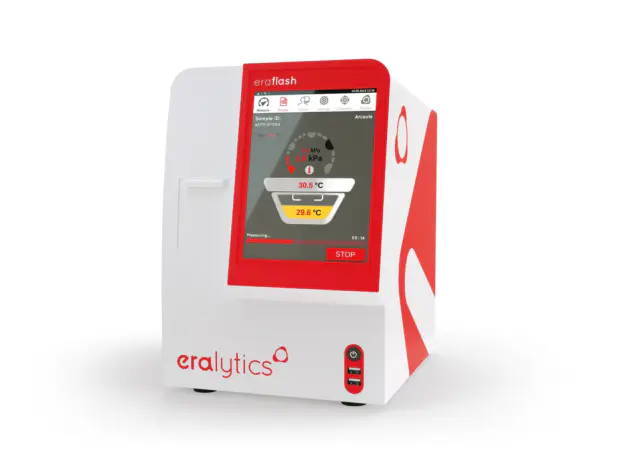
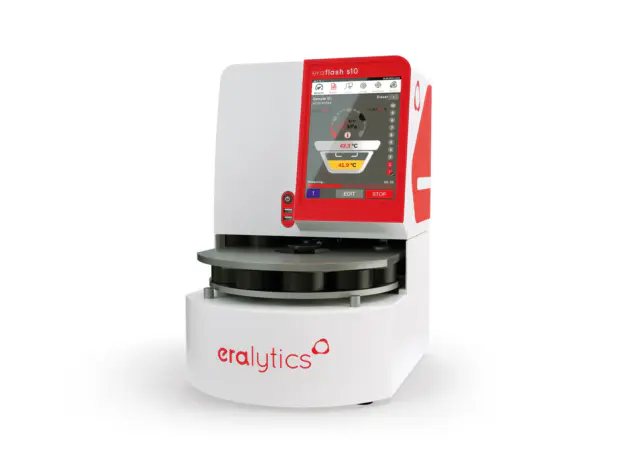
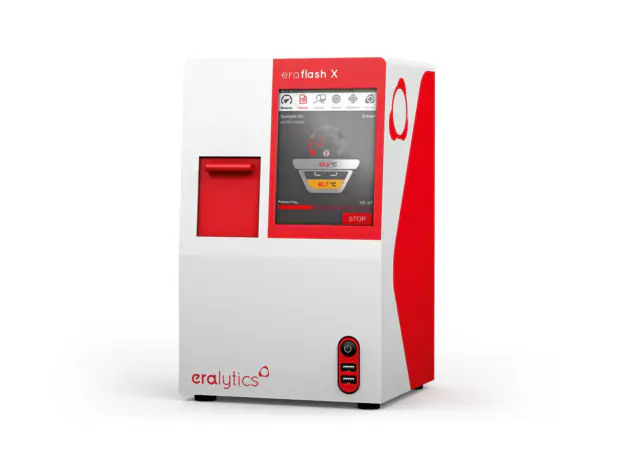
ISO 24966:2026 is an international standard for determining the flash point of chemicals, lubricants, and fuels. It is using the Modified Continuously Closed Cup (MCCCFP) method. Using only 2 mL sample and no open flame, this method significantly enhances safety compared to conventional testing devices. Its closed system provides superior precision and prevents the loss of highly volatile components during testing.
Details
The MCCCFP method described in ISO 24966 is designed to provide results that are statistically equivalent to traditional closed-cup methods like ASTM D93 (Pensky-Martens) but with significant improvements in speed and operator safety. The standard covers a wide temperature range from 24.5 °C to 229.5 °C.
As the measurement takes place in a continuously closed chamber with an electric ignition source, the risk of laboratory fires is virtually eliminated. This makes ISO 24966 the ideal standard for high-throughput testing environments and for materials with unknown or hazardous properties.
Industries & Applications
- Refineries & Fuel Production: Quality control for diesel, jet fuel, and biodiesel blends
- Lubricant Manufacturing: Testing of base oils and formulated lubricants to ensure safety specifications
- Chemical Industry: Flash point determination of solvents and volatile chemicals for SDS (Safety Data Sheet) documentation
- Transportation & Logistics: Classifying hazardous materials for safe air, sea, and land transport according to global regulations
- Waste Management: Screening unknown liquid waste for flammability hazards