Get more information about the standard at ASTM D8606-26
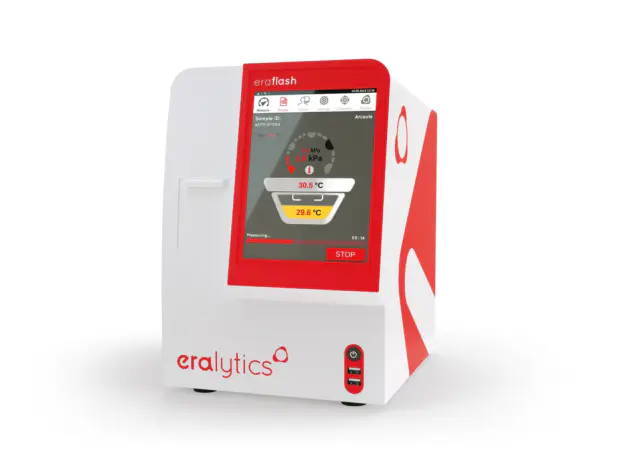
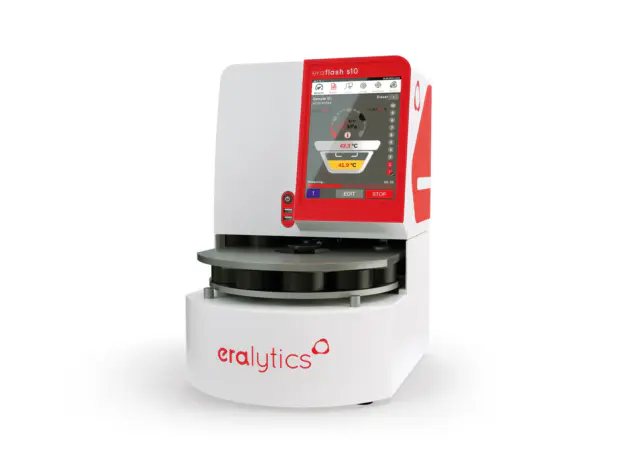
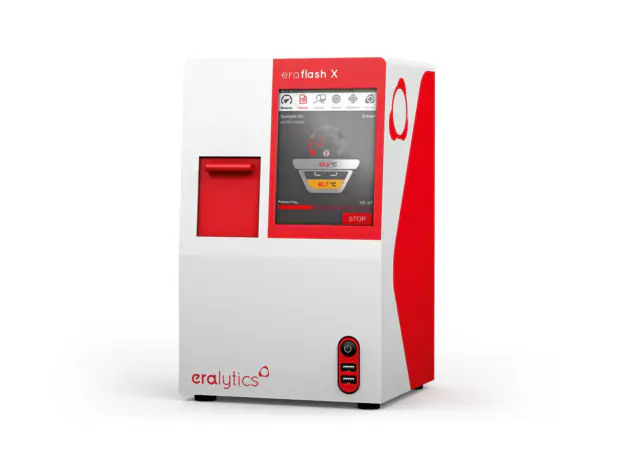
As a continuous pioneer in flash point standardization, eralytics with Andreas Schwarzmann spearheaded the development of the ASTM D8606 method. He was the key architect in defining the Modified Continuously Closed Cup Flash Point (MCCCFP) method.
Details on the standard test method ASTM D8606
The ASTM D8606 test method employs a dynamic approach, utilizing a continuously closed but unsealed cup with air injected into the test chamber. A 2 mL test specimen is introduced into the sample cup, which is then raised and pressed onto the lid to form a test chamber with an overall volume of 7.0 mL. The lid of the test chamber is regulated to a temperature at least 10 °C below the expected flash point. After closing the test chamber, the temperatures of the test specimen and the regulated lid are allowed to equilibrate. The lid is then heated at a prescribed, constant rate of 2.5 °C/min. For the flash tests, a high-voltage arc of defined energy is discharged inside the test chamber at regular 1 °C intervals. After each ignition, a defined amount of air is introduced into the test chamber to provide the necessary oxygen for the next test. The pressure inside the continuously closed but unsealed test chamber remains at ambient barometric pressure. When the instantaneous pressure increases due to the ignition exceeds a defined threshold of 20 kPa, the temperature at that point is recorded as the uncorrected flash point. This dynamic method is applicable for samples with flash points ranging from –25 °C to 90 °C.
Industries and Applications
ASTM D8606 is significant in various industries and applications, including:
- Waste management: Facilities utilize this method to determine the flash points of liquid wastes, discarded materials, and secondary materials to properly characterize them for lawful storage, transport, treatment, or disposal.
- Emergency response: Responders and testing facilities apply this standard to assess the flammability characteristics of unknown materials containing free liquids recovered during emergency response actions.
- Environmental analysis and safety: Environmental laboratories employ this standard to conduct fire risk assessments on complex samples safely, as the continuously closed cup design never uses an open flame, drastically reducing hazards when testing unpredictable wastes.
In summary, ASTM D8606 provides a reliable, inherently safer, and standardized procedure for determining the finite flash point of liquid wastes using the MCCCFP tester. Its application is crucial across environmental and waste management sectors to ensure laboratory safety, facilitate regulatory compliance, and manage flammability hazards effectively.