Get more information about the standard at ASTM D6277-07(2022).
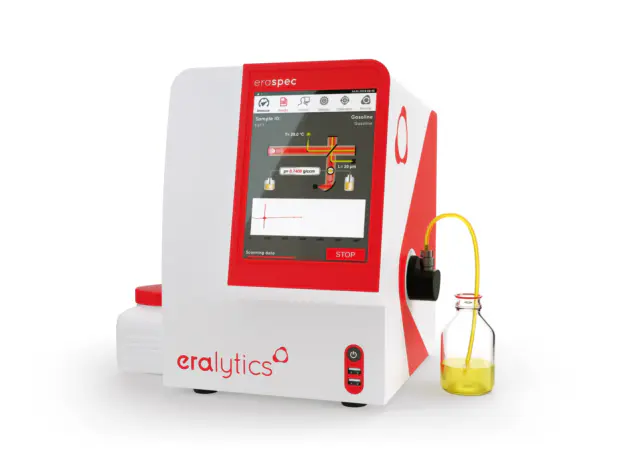
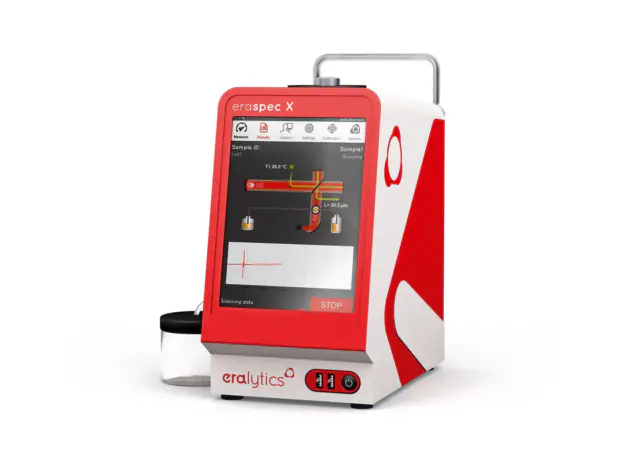
Reflecting our commitment as a leading developer of international standards, eralytics heavily influenced the creation of ASTM D6277. Our expert Dr. Roland Aschauer played a leading role in establishing this essential mid-infrared spectroscopy standard.
Built around a rugged mid-infrared interferometer, this technique allows for the fast and exact measurement of benzene directly at the point of sale. It is an outstanding and highly portable tool for addressing the issues of global fuel adulteration, dilution and fraud.
ASTM D6277 is a standard test method for determining the benzene content in spark-ignition engine fuels using mid-infrared (IR) spectroscopy. Benzene, a known health hazard, is regulated in gasoline to minimize environmental and health risks. This method provides a rapid, simple, and cost-effective approach to quantify benzene concentrations, ensuring compliance with regulatory standards.
Details
The ASTM D6277 test method is applicable for measuring benzene concentrations ranging from 0.1% to 5% by volume in spark-ignition engine fuels. The procedure involves analyzing a fuel sample using mid-IR spectroscopy, which identifies benzene based on its characteristic absorption bands in the mid-infrared region. This technique allows for the rapid and accurate quantification of benzene content without the need for extensive sample preparation.
The method is particularly valued for its speed and simplicity, making it suitable for routine quality control during fuel production and distribution.
Industries and Applications
ASTM D6277 is widely applied in various industries and applications, including:
- Petroleum Industry: Refineries and fuel distributors utilize this method to monitor and control benzene levels in gasoline, ensuring product quality and adherence to environmental regulations
- Environmental Agencies: Regulatory bodies employ this test method to assess benzene concentrations in fuels, aiding in the enforcement of environmental standards and protection of public health
- Automotive Industry: Engine manufacturers and researchers use this method to evaluate fuel properties, ensuring compatibility with engine performance requirements and emission standards
- Analytical Laboratories: Laboratories specializing in fuel analysis apply this standard to provide accurate and reliable data on gasoline composition for clients across various sectors